


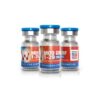

MGF (C-terminal) 2mg
$37.99
MGF (C-terminal) 2mg – Muscle Repair Research Peptide
• C-terminal fragment of Mechano Growth Factor (IGF-1 isoform)
• Studied for satellite cell signaling & regeneration
• 2mg vial • Research use only
• C-terminal fragment of Mechano Growth Factor (IGF-1 isoform)
• Studied for satellite cell signaling & regeneration
• 2mg vial • Research use only
Availability: In Stock
Recommended Add-On
Most customers add Sterile Water X 10ml ( 9% BA) for reconstitution.
MGF (C-terminal) 2mg
What is MGF (C-terminal)?
MGF (C-terminal) is the C-terminal peptide fragment derived from Mechano Growth Factor (MGF), a splice variant of IGF-1 expressed in skeletal muscle following mechanical loading or injury. MGF has been investigated for roles in repair, remodeling, and local anabolic signaling. The C-terminal fragment is used in research to probe region-specific contributions of MGF to muscle adaptation and regeneration pathways.
Provided as a 2mg lyophilized vial, this peptide is intended solely for controlled laboratory studies.
Mechanism of Interest
Endogenous MGF is upregulated in response to muscle stretch or damage, where it is linked to activation of satellite cells and early phases of myogenesis. Studying the isolated C-terminal region helps researchers examine sequence-dependent effects on receptor cross-talk, extracellular matrix (ECM) remodeling, and downstream signaling that differs from systemic IGF-1 activity.
- Focus on local, injury-responsive IGF-1 isoform signaling
- Early repair cues and progenitor cell activation
- Differential effects vs. full-length IGF-1 and other isoforms
Key Research Applications
- Muscle injury and recovery timelines in skeletal muscle
- In vitro myoblast proliferation and differentiation models
- ECM remodeling and angiogenesis markers in repair phases
- Comparative studies vs. PEG-MGF and IGF-1 variants
- Exercise/loading-induced adaptation paradigms
Because the C-terminal region may emphasize local signaling, protocols often measure satellite-cell markers, myogenic regulatory factors, and functional recovery indices.
Chemical Profile & Handling
Form: Lyophilized peptide (2mg per vial) for reconstitution in appropriate research-grade diluent.
Notes: Sequence length and composition are specific to the C-terminal region of MGF and may exhibit distinct physicochemical properties vs. native MGF or IGF-1.
Researchers typically optimize concentration to align with target endpoints (e.g., satellite cell activation, ECM markers). Document buffer composition, pH, and any carrier proteins used to maintain stability and reproducibility.
Study Design Considerations
- Define primary endpoints (e.g., Pax7+, MyoD/MyoG expression, fiber CSA, force recovery).
- Use time-course sampling to capture early (inflammatory) vs. mid-phase (regenerative) signals.
- Contrast localized MGF signaling with systemic IGF-1 to delineate pathway specificity.
- Include proper controls and document storage/handling to minimize peptide degradation.
Comparison to Related Compounds
PEG MGF: Pegylation extends circulation time and is useful when sustained exposure is desired; the non-PEG C-terminal fragment can help isolate short-window, region-specific effects.
IGF-1 (systemic): Broader metabolic actions; often used as a comparator to highlight local vs. systemic outcomes in regeneration research.
Repair-focused peptides: Studies may include TB-500/Tβ4 and BPC-157 for mechanistic contrasts (actin dynamics, angiogenesis, ECM remodeling).
Storage & Stability
Store dry vials at −20°C, protected from light and moisture. After reconstitution, keep at 2–8°C and use within a protocol-appropriate timeframe. Avoid repeated freeze–thaw cycles. Handle using aseptic technique and appropriate PPE.
For Research Use Only
MGF (C-terminal) 2mg is intended exclusively for laboratory research by qualified personnel. Not for human or veterinary use. Users are responsible for compliance with all applicable regulations and institutional policies.
Learn More:
Additional Information
| Weight | .01 g |
|---|
Disclaimer
This product should only be handled by qualified, and licensed professionals. The product may not be used as a drug, agricultural or pesticidal product, food additive or household chemical – and may not be misbranded as such. All information on this website is available for educational purposes only. Bodily introduction of any kind into humans and/or animals is strictly forbidden by law.
Only logged in customers who have purchased this product may leave a review.
Free : 7 Days
Priority : 4-6 Days
Express : 1-3 Days
Priority : 4-6 Days
Express : 1-3 Days
Related products

Reviews
There are no reviews yet.