

Melanotan II 10mg
$50.99
Melanotan II 10mg – Melanocortin Pathway Research
• α-MSH analog; MC1R/MC4R activity
• Studied for pigmentation & photobiology
• 10mg lyophilized vial • Research use only
• α-MSH analog; MC1R/MC4R activity
• Studied for pigmentation & photobiology
• 10mg lyophilized vial • Research use only
Availability: In Stock
Recommended Add-On
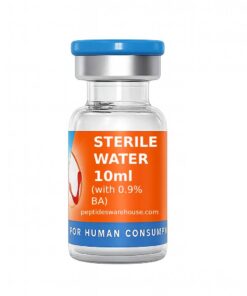
Most customers add Sterile Water X 10ml ( 9% BA) for reconstitution.
Melanotan II 10mg
What is Melanotan II?
Melanotan II (MT-II) is a synthetic analog of α-melanocyte-stimulating hormone (α-MSH). It engages the melanocortin receptor family—most notably MC1R on melanocytes and MC4R in central pathways. In research, MT-II is used to probe pigmentation biology, photoprotective signaling, and melanocortin-mediated neuroendocrine effects.
This listing supplies a 10mg lyophilized vial intended exclusively for controlled laboratory investigations.
Mechanism of Action
MT-II mimics α-MSH by activating G-protein–coupled melanocortin receptors. At the skin level, MC1R activation stimulates adenylate cyclase, raising cAMP and driving melanogenesis via MITF and downstream tyrosinase pathways. Centrally, MC4R engagement is studied for roles in appetite, energy balance, and sexual behavior circuits.
Because MT-II acts both peripherally and centrally, it is a versatile probe for mapping melanocortin signaling across tissues.
Key Research Applications
- Pigmentation biology and photoprotective responses to UV exposure
- Signal transduction downstream of MC1R in melanocytes
- Central melanocortin pathways (MC4R) in behavior and energy balance
- Comparative studies versus α-MSH and related analogs (e.g., Bremelanotide/PT-141)
- Cross-talk between inflammatory pathways and melanocortin signaling
Experimental designs often quantify melanin content, tyrosinase activity, gene expression (MITF, TYR), and receptor-specific readouts to profile MT-II effects.
Chemical & Structural Notes
Melanotan II is a cyclic heptapeptide analog of α-MSH designed for enhanced receptor affinity and stability. Like other melanocortin analogs, it is typically supplied in lyophilized form to preserve integrity prior to reconstitution.
Form: Lyophilized powder (10mg/vial)
Reconstitution: Use suitable sterile, research-grade diluent per protocol
Handling: Document buffer, pH, and carrier proteins to minimize adsorption/degradation
Pharmacology in Research
In preclinical models, peripheral exposure is linked to skin pigmentation endpoints, while central exposure is tracked via behavioral and metabolic readouts. Time-course experiments commonly examine early signaling (cAMP/PKA) followed by transcriptional changes and melanin accumulation over days.
Researchers may contrast MT-II with selective MC1R or MC4R ligands to parse receptor-specific contributions.
Comparison to Related Compounds
PT-141 (Bremelanotide): Emphasizes central MC4R-mediated arousal pathways; less focus on pigmentation.
α-MSH: Endogenous ligand with shorter half-life; MT-II is engineered for stability and potency.
Melanotan I (Afamelanotide): Clinically explored analog with different receptor profile and kinetics.
Storage & Stability
Store dry vials at −20°C, protected from light and moisture. After reconstitution, refrigerate at 2–8°C and avoid repeated freeze–thaw cycles. Maintain aseptic technique and record lot numbers, storage dates, and diluent composition for reproducibility.
For Research Use Only
Melanotan II 10mg is intended strictly for laboratory research by qualified personnel. Not for human or veterinary use. Users are responsible for compliance with all applicable regulations and institutional policies.
Learn More:
Additional Information
| Weight | .01 g |
|---|
Disclaimer
This product should only be handled by qualified, and licensed professionals. The product may not be used as a drug, agricultural or pesticidal product, food additive or household chemical – and may not be misbranded as such. All information on this website is available for educational purposes only. Bodily introduction of any kind into humans and/or animals is strictly forbidden by law.
Only logged in customers who have purchased this product may leave a review.
Free : 7 Days
Priority : 4-6 Days
Express : 1-3 Days
Priority : 4-6 Days
Express : 1-3 Days
Related products

Reviews
There are no reviews yet.